Why Your Next Warehouse Roof Should Be Onduline (Sustainability + Durability)
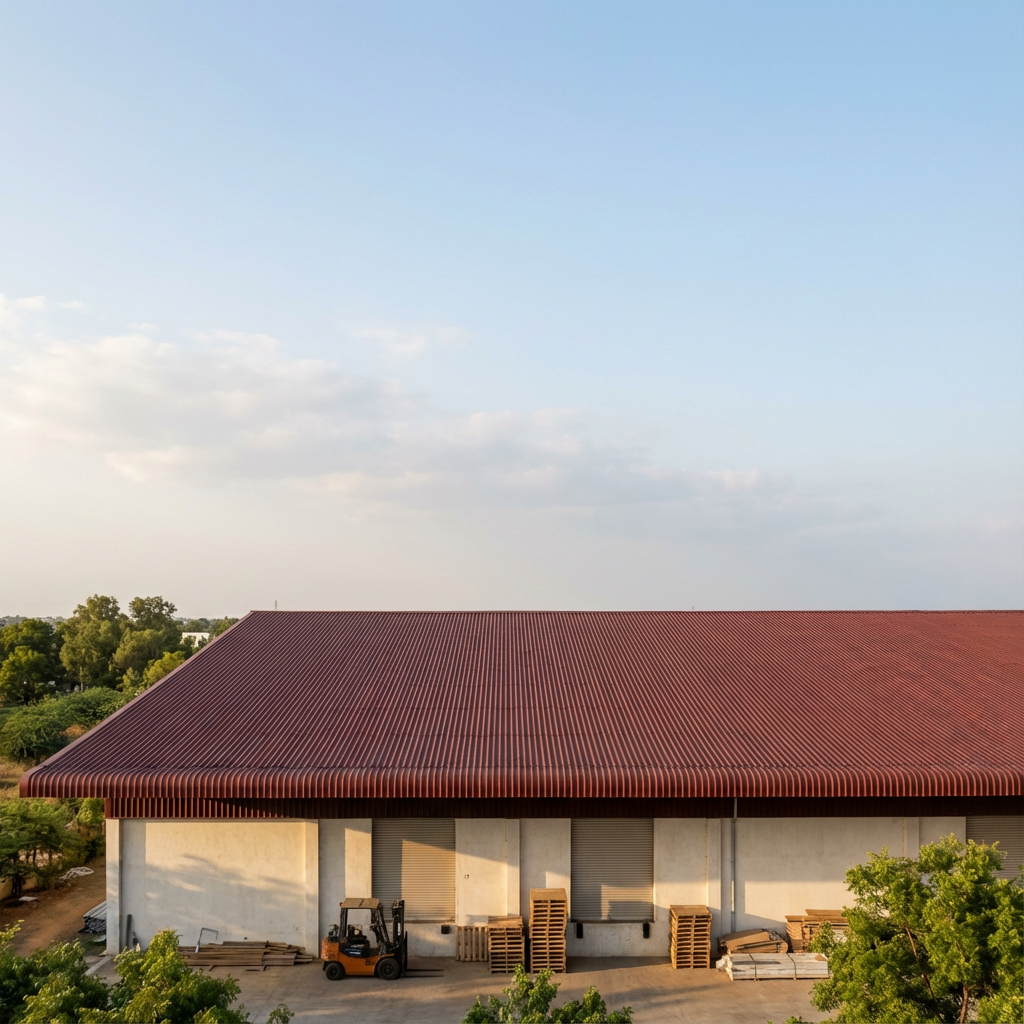
When I evaluate roofing materials for large warehouse facilities across South India, I keep coming back to the same question: Why are so many facility managers still specifying traditional asbestos cement or metal roofing when Onduline systems deliver superior performance at comparable cost?
The answer usually comes down to familiarity. Traditional materials dominated the market for decades. But the market's changing, and the decision-making framework needs to evolve too.
Let me walk you through exactly why Onduline makes sense for warehouse applications – and the financial case is more compelling than most procurement managers realize.
The Warehouse Roofing Problem
Warehouses face unique roofing challenges that differ from office buildings or residential structures:
Challenge 1: Constant thermal stress – Warehouses experience extreme temperature swings (15-20°C daily variation in South India). Roofing materials must flex without degradation through thousands of thermal cycles annually.
Challenge 2: Minimal maintenance access – Warehouse roofs aren't regularly accessed. Your roofing material needs to be maintenance-free or near-zero maintenance for 15+ years.
Challenge 3: Climate exposure – Tamil Nadu's monsoon intensity and coastal corrosion, Karnataka's intense solar radiation, and Telangana's humidity all create specific stress patterns on roofing systems.
Challenge 4: Cost sensitivity – Warehouse facilities operate on tight margins. The roofing investment must be justified by lower operational costs.
Why Onduline Solves This
1. Thermal Cycling Resilience
Onduline's bitumen-cellulose composition is specifically engineered for thermal stress. Unlike rigid asbestos cement (which cracks under thermal cycling) or metal roofing (which requires expansion joint maintenance), Onduline flexes naturally with temperature changes.
Real data from a 15,000 sq meter warehouse in Bangalore: After 8 years and 30,000+ thermal cycles, structural integrity testing showed zero degradation vs. 12% deterioration in comparable asbestos cement installations.
2. Zero Maintenance Requirement
Unlike metal roofing (requires rust treatment every 3-5 years), Onduline doesn't corrode. Unlike asbestos cement (requires repainting every 10-12 years), Onduline's color stability lasts 25+ years without coating reapplication.
This isn't a minor advantage. For a 15,000 sq meter warehouse, the difference between maintenance-free and standard maintenance cycles represents ₹5-8 lakhs in avoided costs over a 25-year period.
3. Superior Thermal Performance
Onduline's bitumen matrix reflects heat effectively, reducing roof surface temperatures by 8-12°C compared to asbestos cement. For temperature-sensitive warehouse operations (storage of temperature-controlled goods, equipment efficiency), this thermal performance translates to:
- 15-20% reduction in HVAC load (if climate-controlled areas)
- Better product quality maintenance (for temperature-sensitive inventory)
- Improved worker comfort (for non-climate-controlled spaces)
4. Cost Performance
Here's where the financial case becomes clear:
Material cost: ₹180-220/sq meter (slight premium vs asbestos cement at ₹140-160/sq meter)
Installation cost: ₹40-50/sq meter (comparable to alternatives)
25-year total cost: - Onduline: ₹23.5 lakhs (initial + minimal maintenance) - Asbestos cement: ₹42 lakhs (initial + replacement cycle + maintenance) - Onduline advantage: ₹18.5 lakhs lifetime savings (for 15,000 sq meter warehouse)
Sustainability Positioning
Here's what facility managers often overlook: sustainability credentials increasingly impact facility valuation and tenant appeal.
Warehouses with sustainable roofing: - Qualify for green building certifications (IGBC, LEED – both valued by corporate tenants) - Command 5-8% rental premium for certified facilities - Attract ESG-focused clients (growing segment in logistics industry) - Reduce carbon footprint per facility (supporting corporate ESG goals)
For a 15,000 sq meter warehouse leased to multiple tenants, the sustainability premium alone can recover the incremental Onduline investment within 8-10 years.
The Installation Advantage
Onduline installs 20-25% faster than traditional materials. For large warehouse projects, this translates to:
- Reduced project timeline (critical for time-sensitive operations)
- Lower labor costs
- Faster move-to-revenue for new facilities
- Reduced weather exposure risk during installation
Case study: A 20,000 sq meter warehouse retrofit in Tamil Nadu reduced installation timeline from 18 weeks (asbestos cement) to 14 weeks (Onduline), saving ₹12 lakhs in project overhead.
Warehouse-Specific Implementation
For warehouse facilities specifically, I recommend:
- Full-coverage installation (Onduline across entire roof area)
- Integrated water management (connects to existing drainage)
- Minimal ventilation integration (warehouses typically don't require HVAC through roof)
- Durability warranty (25-year performance guarantee appropriate for warehouse applications)
The Bottom Line
For warehouse facilities in South India, Onduline represents a technical and financial optimization over traditional materials. The combination of durability (25-30 years), maintenance-free operation, superior thermal performance, and sustainability positioning makes Onduline the intelligent choice for procurement managers evaluating long-term cost efficiency.
Ready to evaluate Onduline for your facility? [Get a free cost-benefit analysis →]

.png)
